
Don’t stumble but believe
3 May, 2026 5th Sunday Easter Year A
John 14:1-12
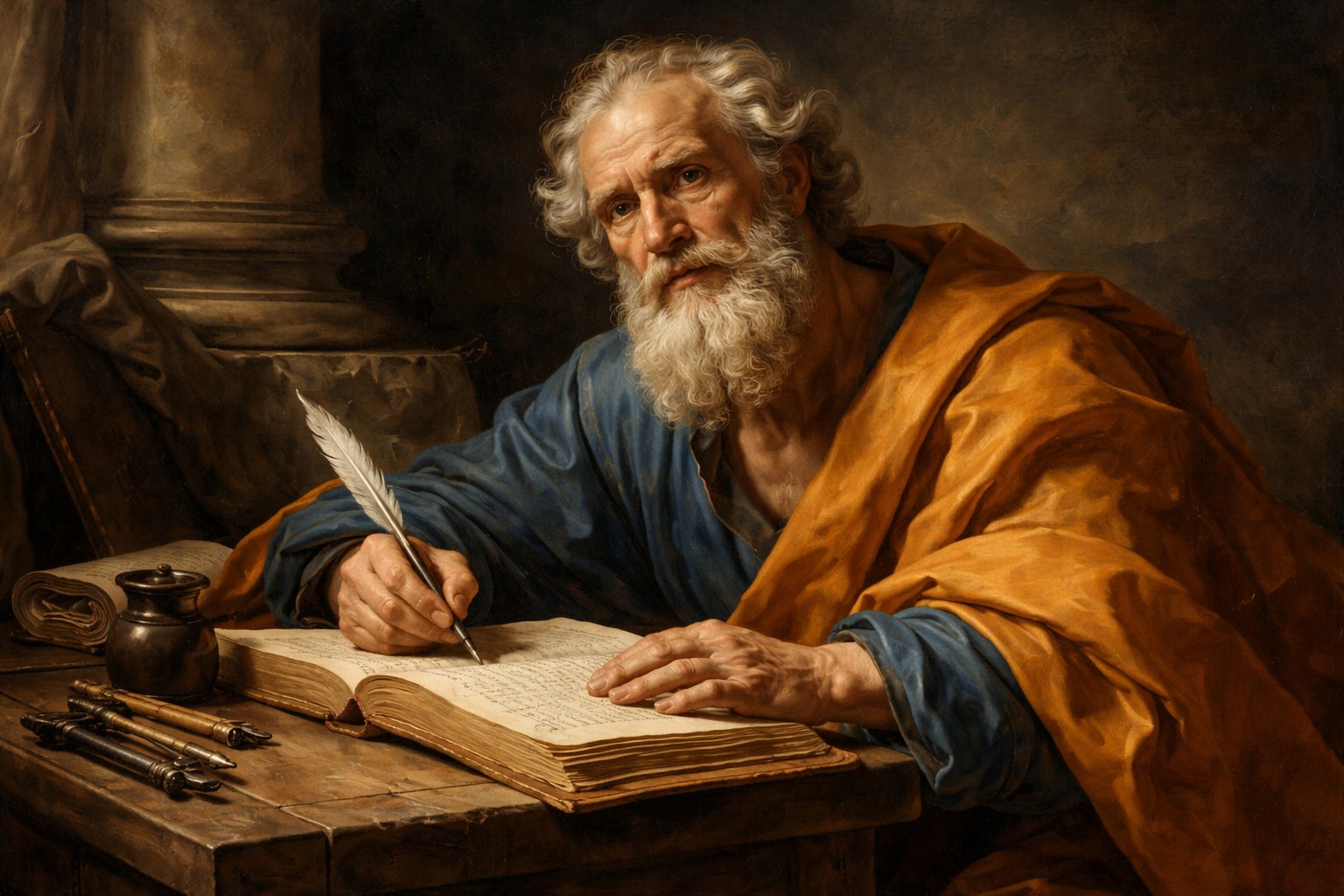
What’s all this about living stones and stumbling stones and cornerstones in the second reading (from the First Letter of St Peter)? Let’s take a deep dive.
The entire passage takes up some deep themes in the Old Testament prophet, Isaiah. There’s hardly a word of St Peter in these few verses that is not echoing him. (Even Psalm 118, which he quotes in the business about the cornerstone, is spliced with a line from Isaiah 8.) So, we need to ponder Isaiah, especially chapters 24 and 8, where the key quotations come from.
The prophet’s writing in the 700’s BC, a time of great stress for God’s people. Isaiah’s message is about the impending destruction of much of Israel through the empire of Assyria.
The “flood” of destruction will rise “to the neck,” leaving Jerusalem standing among the ruins. In the midst of it, God, he says, is laying a stone in Zion—he’s going to rebuild out of this diminished remnant that’s left; he’s going to reboot the covenant, restart the plan to make Israel the epicenter of his conquest of evil, reunification of humanity, defeat of death, and renewal of all things, thereby accomplishing his original, deep purpose for creation.
St Peter sees Isaiah’s word as a pattern for his own writing to the churches in Asia Minor. He says that this reboot is finally being accomplished by Jesus (the cornerstone) through the Church (the spiritual house, holy priesthood, chosen race…). But the real shock is how Isaiah and St Peter say it is realised: by suffering, trial, temptation, defeat, by fidelity through the worst of it. The rejected stone becomes the cornerstone. That’s the Jesus way that Isaiah anticipated. Don’t stumble over it, he warns, but believe.
Like Jesus, the apostles ate, drank, and breathed the Old Testament. Isaiah, the Psalms, Genesis, Exodus, and so on shaped their imaginations, hopes, fears, and intentions so deeply that the divine word became inseparable from their outlook, words, and actions. In this way they forged their creases in the world in concert with God’s deep purposes.
The task St Peter gives us in this letter is to keep faith, to run along these apostolic creases, making them the track down which our lives run. In this way we are built up together into that spiritual house as the living stones he’s talking about. Meditating on his words (and digging down into their Old Testament roots) will give us a much deeper awareness of what is at stake in our faith, what it is we are hoping for, and how to understand the trials and temptations always threatening to derail our path.
Fidelity to that hope despite its apparent failure—perceiving it, through God’s faithfulness, as strangely and wonderfully the first moment of victory—is what he means in this passage by faith.
W Chris Hackett
© Majellan Media 2026
We encourage you to share and use this material on your own website. However, when using materials from Majellan Media, please include the following in your citation: Sourced from www.majellan.media