
Our Lord, Our King
23 November, 2025 Christ the King Year C
Luke 23:35-43
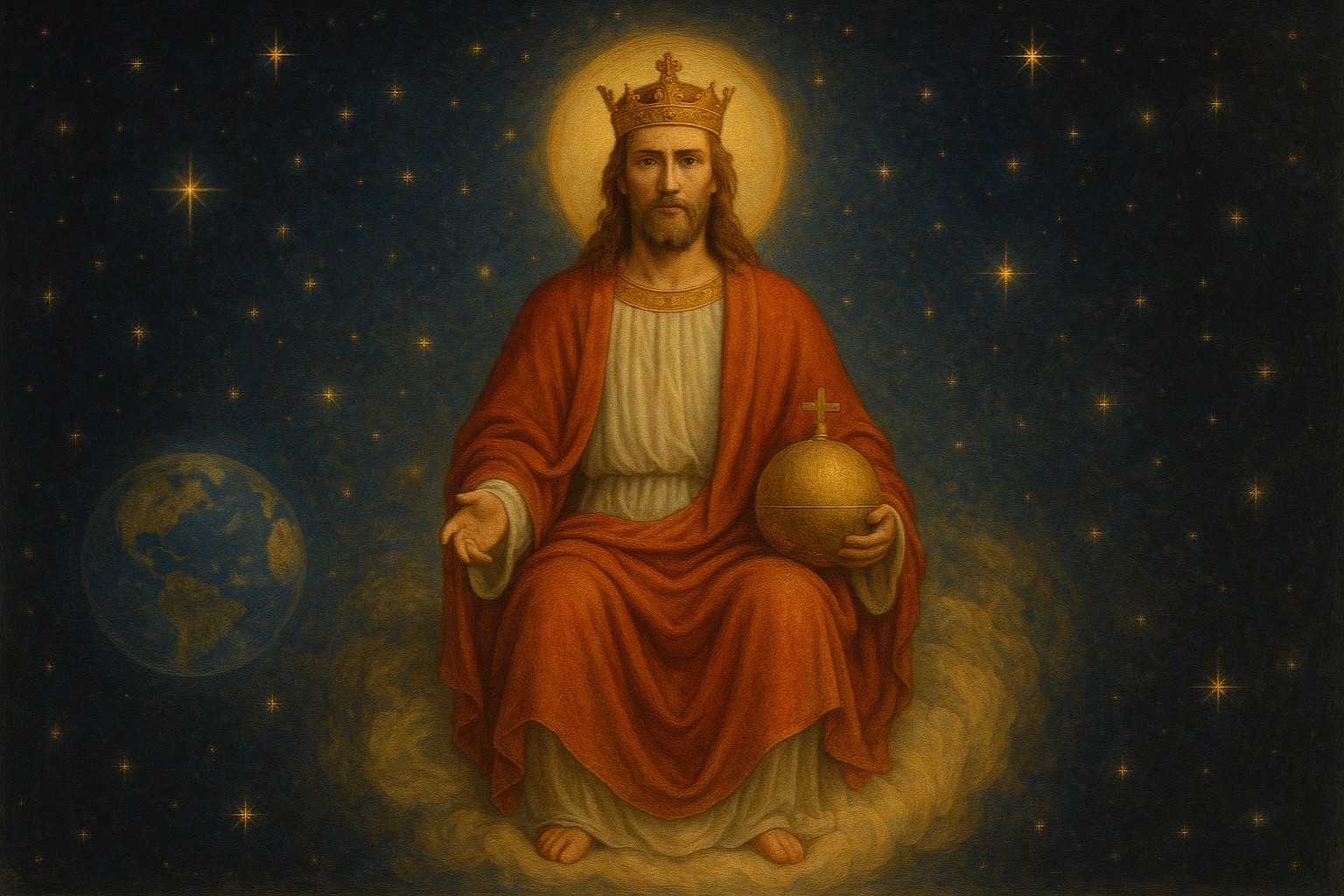
We come to the last Sunday of this liturgical year, and our year-long celebration of all the wonders that God has done for us culminates in the feast of Christ the King. Crowning the liturgical year, we profess and rejoice that Christ is King of the Universe, Lord of all creation, and that he is Lord of our lives, individually and communally.
On this feast, we also rejoice that, unlike the monarchies, dictatorships and governments that come and go in the world, Christ the King reigns forever. But today’s feast challenges us to think about what it means to say that Christ is King.
We remember that, after his arrest, on the night of his trial, Jesus is taken to be examined by the governor, Pontius Pilate. In the course of their conversation, Pilate asks Jesus if he is indeed a king. In John’s Gospel, Jesus replies that his kingdom is not of this world (Jn 18:36)). Jesus’ response clearly implies that he is a king, but he stresses that his kingship is not the kind that the world has come to know in the course of human history.
Indeed, Jesus’ whole life attests to the fact that his kingdom is definitely not of this world. His kingship brooks none of the trappings of power, majesty or wealth which worldly kingship readily claims and jealousy guards for itself. His kingship also firmly rejects the methods of coercion, violence and abuse of power that worldly power so often wields.
The events of Jesus’ passion and death following his arrest demonstrate that his crown is made not of jewels but of thorns; he wears no rich finery; indeed he is stripped of his clothes; he is mocked and tortured; his hands and feet pierced with nails; he is crucified; he dies battered and bloodied; his throne is a cross. Even when he rises from the dead, his resurrected body bears the wounds of his suffering, born for love of us.
Rather than power as the world exercises it, rather than power over people, the power of Christ’s kingship is the power of love. It is a love that is all-embracing and steadfast. It is a love that refuses to be anything but love, even in the face of violence and rejection. It expresses itself concretely and consistently in the virtues of hospitality, compassion, patience, gentleness, and kindness (as described by the apostle Paul in 1 Cor 13), and in an unswerving concern for justice and for the welfare of others, especially the most vulnerable. This is “the mind of Christ” (Phil 2: 5-8) that we, his disciples, are called to make our own.
The feast of Christ the King surely challenges us to be especially attentive to the ways in which we exercise power in our dealings with others – be it in our family or our community or our workplace – that it be true to the example of Christ our King.
Anne Hunt
© Majellan Media 2025
We encourage you to share and use this material on your own website. However, when using materials from Majellan Media, please include the following in your citation: Sourced from www.majellan.media