
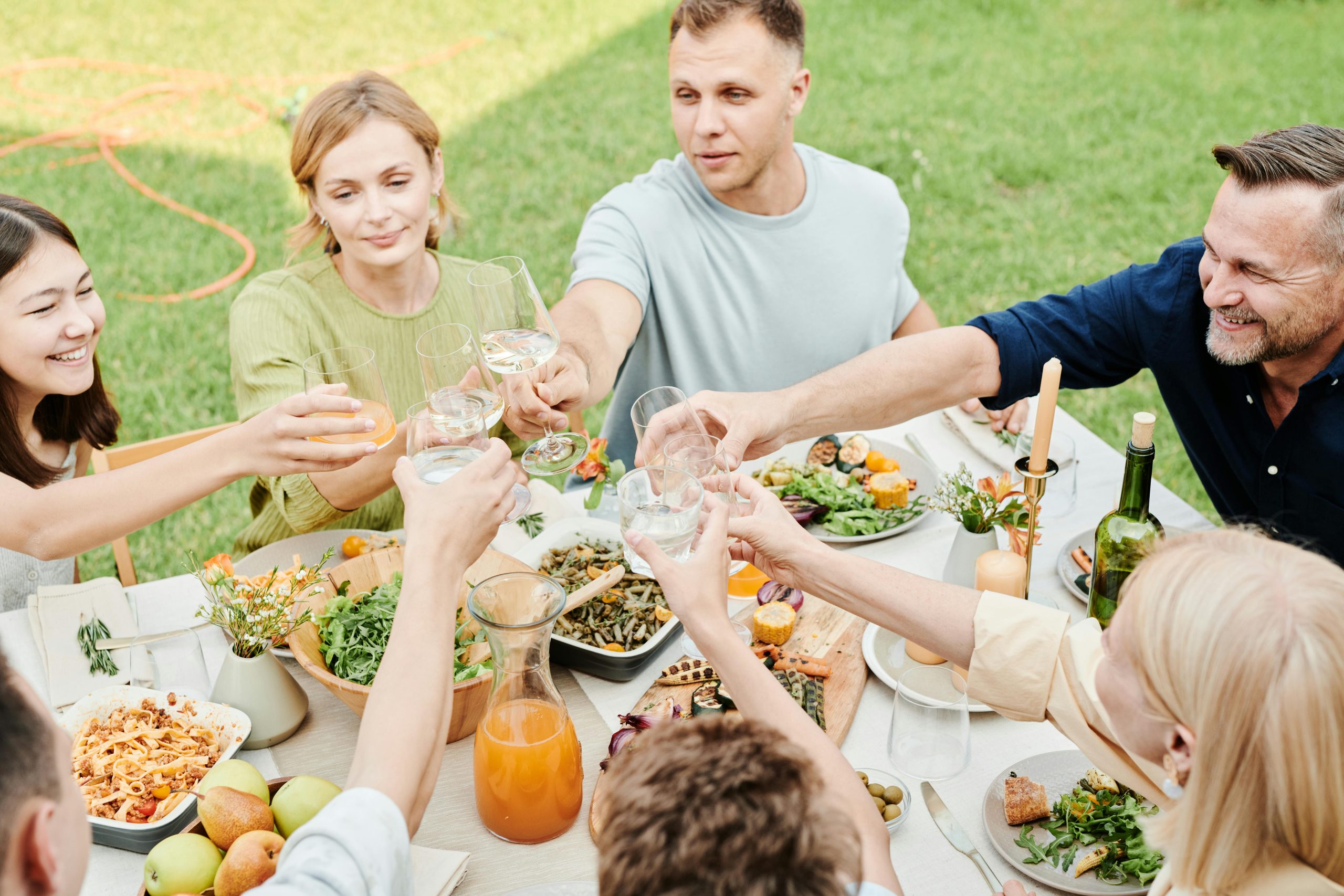

Many families will have neurodivergent members sitting around the Christmas table. Large family gatherings can be challenging for Autistic, ADHD or otherwise neurodivergent family members. What are some ways we can accommodate this and make sure everyone has a fun and relaxed Christmas?
Food
When surrounded by noise, stimulation and the stress of expectation, it can really help to have the comfort of familiar foods. I’m not suggesting that the whole family needs to forgo a Christmas feast in favour of buttered pasta, but there are ways to accommodate everybody’s food preferences.
This might involve things like providing ‘safe food’ options alongside the rich turkey and pudding and allowing everyone to fill their own plates without judgement. It would be really helpful if, one of these days, Ingham or Steggles came out and made seasonal chicken nuggets, shaped like Christmas trees and stars. Until that day, the regular kind may have to suffice!
Schedule
It can help to think through how the day will play out ahead of time. Some ND family members will take comfort from knowing in advance what to expect in the day’s scheduling. If I know that lunch won’t be served until 2pm, I don’t need to feel anxious when it’s not on the table at 12.
Consider how much is scheduled into one day. I consider one event per day as a good rule of thumb. When there are multiple groups of in-laws and stepfamilies to make time for, it can be tempting to try to see everyone on the same day. But this is stressful for all involved, especially ND family members. Consider making use of surrounding days to stretch out the Christmas celebrations.
Transitions – those periods of time moving from one situation to the next – can be especially stressful. Consider that some family members might need time to acclimatise to new situations. Allow settling-in time, and advance warning before leaving or moving between activities.
Gift Giving
Gift giving is supposed to be a fun experience, but for some ND children and adults it can be a time fraught with stress. It can be an overwhelming and unpredictable time with the added expectation of performing gratitude and masking disappointment.
For ND gift-givers, the expectation that we should ‘just know’ what gift we should have bought can be a real burden. Neurodivergents aren’t always great at picking up on hints. Practice clear communication of expectations and assume goodwill when we get it wrong.
For children who crave predictability, it might help them if they are told quietly ahead of time what to expect in their parcels. Surprises are fun for some, but not for all!
Worship
Consider which Mass might work best for ND family members. Some enjoy the solemn ritual of Midnight Mass. Others might enjoy an outdoor children’s Mass with the opportunity to dress up and more capacity to wriggle. It is also possible that the more subdued and straightforward morning Mass on Christmas Day would work best. Don’t avoid going to Mass because you are concerned your child might not be welcome. Mass is for everyone.
Other Considerations
ADHDers can find it hard to sit still for long periods of time. If the weather is good, consider making use of the outdoors for parts of the day. In a similar way, it can help to have quiet rooms available where people can take breaks from the noise and clamour.
Be aware that some traditions, like crackers and balloons, may prove more stressful than festive for some family members. Consider workarounds if these are upsetting.
But Why?
I can already hear the complaints. Why are we pandering to the needs of these people? Shouldn’t they just harden up and cope? Nobody was neurodivergent when I was a child! Why should everyone have to change to accommodate a few people?
Christmas is for everyone. It would seem rude if we were to share Christmas day with a family from Liechtenstein and didn’t make any room on the table for their Äppelklatzen. In the same way, it’s a little unfair to insist only on traditions that suit the neurotypical family members without making any accommodations for neurodivergents.
Should children learn coping skills? Absolutely. Kids are learning to cope every day. But Christmas is not the best time to do this. There is already so much going on, plus we want everyone to be as relaxed as possible. We don’t give swimming lessons in white-water rapids.
Christmas should not be a time to test an autistic child’s ability to perform their coping skills at full capacity.
Christmas should not be a time of extreme masking followed by extreme burnout.
Christmas should not be a time of such overwhelm that an ADHD mum feels she can’t manage it without the aid of alcohol.
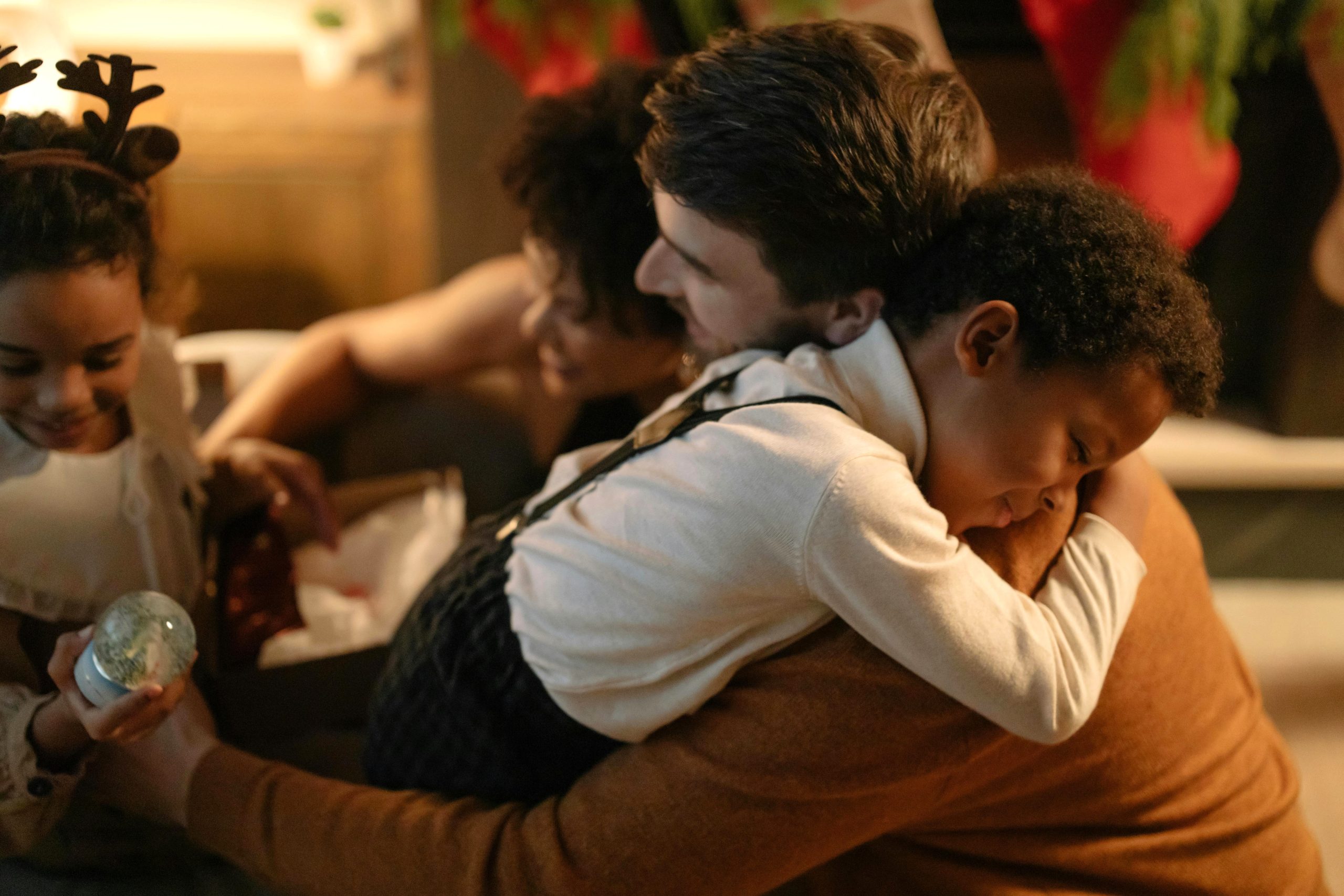
Christmas should not be a time to smother expressions of excitement that others might consider odd. To be honest, I would love if every Christmas celebration were a place where neurodivergent joy could be exercised at full volume. Where it is perfectly okay to jump and flap and cheer and stim and twirl and be just a little bit silly. Neurodivergent joy is a beautiful thing.
Christmas is a time of joy and feasting. A time when everybody should be included. For Christians, it’s a time to marvel at the Mystery of the Incarnation. God loved us so much, he became human in the form of a tiny baby. This is the core of our celebration, and this celebration is for all of us. Everything else is but so much lovely tinsel.
As the innkeeper accommodated the Holy Family in the stable, let’s accommodate our neurodivergent kin to make Christmas a happy time for everyone.
Footnote: The term “neurodivergent” was coined by Australian sociologist Judy Singer in the late 1990s. Neurodivergent literally means having a brain that diverges from typical neurological patterns, encompassing various conditions and traits that affect how individuals process information, communicate, learn, and interact with the world.