
In solidarity with Jesus
19 October, 2025 29th Sunday Year C
Luke 18:1-8
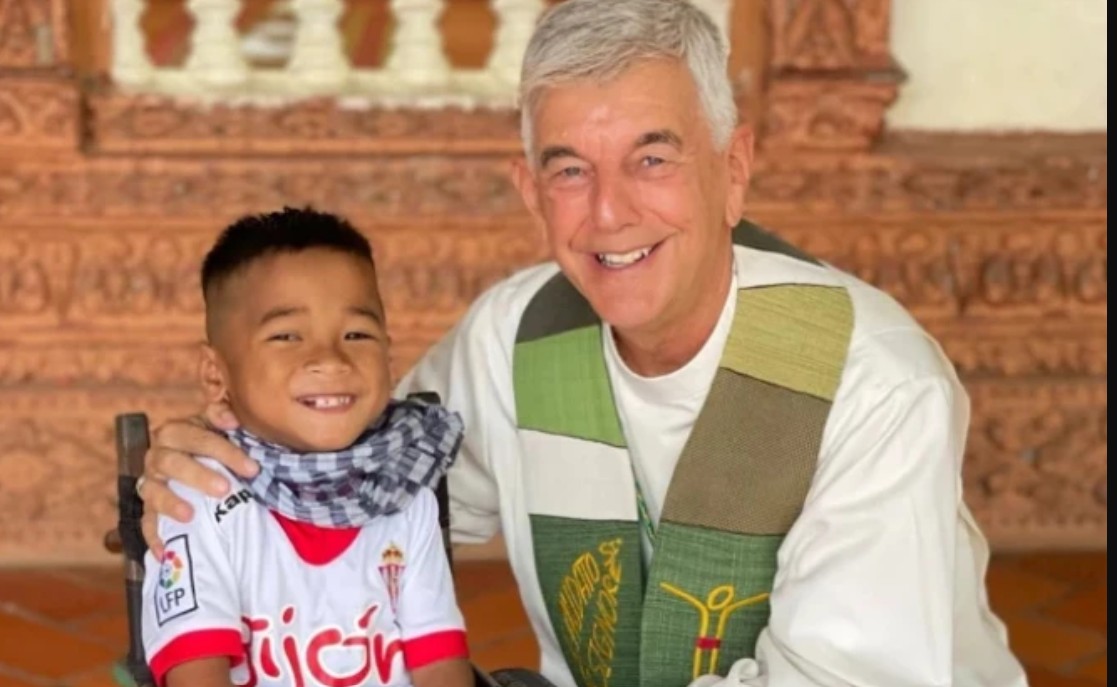
The determined widow in this week’s parable encourages us to persist in prayer. She was not deterred by the judge who neither feared God nor cared what people thought. Instead, she demonstrates what St Therese of Liseux described as a “surge of the heart”: a trust and confidence in God who knows what we need and who draws close to us.
Indeed, when we pray, we need not speak much at all; but merely let ourselves be still before God and let God nourish us. St Alphonsus Ligouri advised us to “speak with familiarity and confidence as to your dearest and most loving friend. In return, God will speak to you – not that you will hear audible words in your ears, but words that you will clearly understand in your heart.”
But the gift of prayer goes beyond intercession. In prayer, we discover a clear vision of our deepest identity – both of who we are and whose we are – and of who we are called to be and what we are called to do. Being aware of how God is at work in our lives awakens within us a response to be a prophetic presence in the world. We are not content to act within the limits of our current reality, but are inspired to move towards that vision of who we are called to be.
We are invited to enter ever more deeply into the mystery of God – into a divine presence and purpose larger than our finite frames of reference. We are drawn into the ongoing work of God within us, throughout the world and, indeed, in the whole of creation. In this way, prayer awakens us and inspires us to act, to make a difference by bringing about justice, mercy and wholeness.
As a sixteen-year-old, Monsignor Enrique (Kike) Figaredo, a Spanish Jesuit who has spent his life working with victims of landmines in Cambodia, once prayed on a Holy Thursday at a Taize monastery for God to enlighten him with his life’s direction. He said he was “looking for Jesus, like a madman”. He heard within his heart Jesus saying to him, “Don’t go crazy. If you want to know me, I live with others. My face is that of people. If you look for me, look for me in people.” This realisation inspired him to dedicate his life to victims of landmines.
Known as the Bishop of the Wheelchairs, Monsignor Figaredo wears a crucifix which he describes as the wheelchair crucifix. One of the legs of the crucified figure is shorter than the other. This wheelchair crucifix is a symbol of the victims of landmines; of Jesus in solidarity with people who suffer from landmines; and of God entering into the suffering of his people and illuminating their lives. Kike, as Monsignor Figaredo is affectionately known to Cambodians, says the wheelchair is his sacrament. It is where human suffering meets the beauty of God’s love.
God is intimately present with his people and his love transforms every human experience.
Sophie Clements
© Majellan Media 2025
We encourage you to share and use this material on your own website. However, when using materials from Majellan Media, please include the following in your citation: Sourced from www.majellan.media