
Learning to see as God sees
15 March 2026 4th Sunday Lent, Year A
John 9:1-41
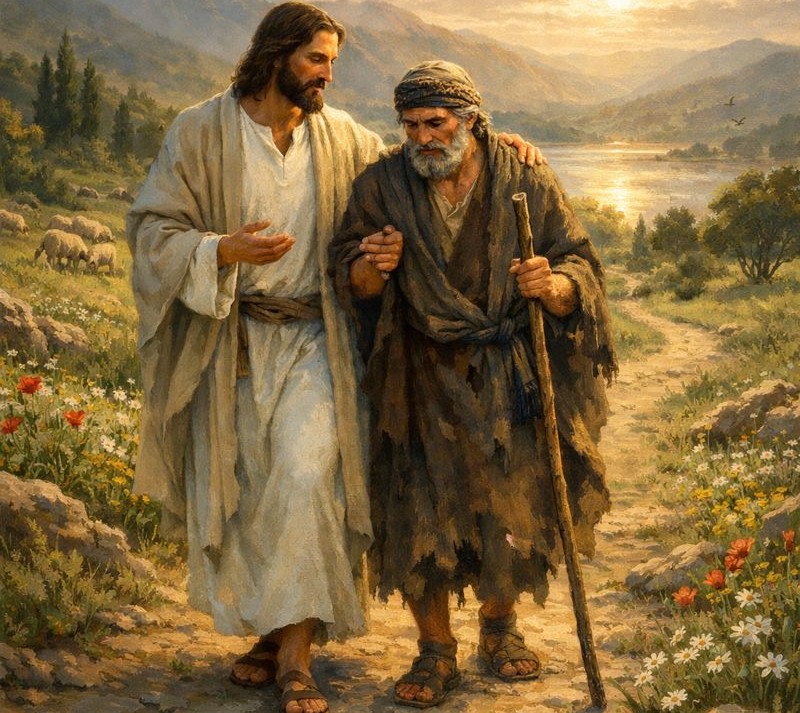
When Jesus says he is the light of the world what do we make of it? Have we ever experienced this light? Or do we live somewhere between the darkness and the promise of it, perhaps too caught up in the light of our phones to see the people around us?
In the gospel Jesus sees a man born blind, and the disciples ask whether it was his sin or his parents that caused it? Neither he replies. Beyond the social shaming Jesus sees the man himself, one in whom we’ll behold the glory of God.
Our coming to sight doesn’t always happen instantly, as the man reveals, but step by step. It begins when Jesus sees him and the man goes and bathes in the pool as Jesus had said; trusting in him he receives his sight. However, now he’s doubted by his friends, abandoned by his parents, and three times he’s questioned by the Pharisees, who determine Jesus is a sinner, until finally they drive the man out of the synagogue – and through it all he holds his nerve and simply tells them what he knows, what Jesus has done: he bears extraordinary witness to him.
Hearing what’s happened Jesus comes looking for him and invites him to take a further step into the light. When he says yes, and worships him, he affirms that it’s Jesus alone who gives real meaning to our lives, that he is our life. In doing so the man reveals what we long for but are often uncertain about. Are we able to see him in those we are close to, or in the dark moments of our lives, let alone in the outcast and the stranger?
As one young man did when he began leaving food with homeless people in a nearby street, until one evening one of them said to him, ‘talk to us, don’t just feed us like dogs’. He then realised they were human too; that they had something to give him, and it changed his life: in their company he came to know Jesus.
Finally, Jesus speaks with the Pharisees of his coming into the world to enable us to choose. Do we begin to open our lives to his light – to the glory of God – or hold fast to what we’ve known, blinded by our reluctance to see? Jesus doesn’t condemn the Pharisees but reveals to them their blindness, as he does with us.
The first two readings speak of a God who ‘looks at the heart’ not simply our self-presentation. This is what informs God’s way in directing Samuel’s choice of a king. And like the prophet, we have to learn to see as God sees. While Paul speaks of discovering ‘what the Lord wants of you’ by facing into the darknesses of our lives and letting them be illuminated by the light of Christ. As those about to be baptised at Easter reveal to us, this transformation is at the heart of Lent.
Damian Coleridge
© Majellan Media 2026
We encourage you to share and use this material on your own website. However, when using materials from Majellan Media, please include the following in your citation: Sourced from www.majellan.media