
The poetic mystic
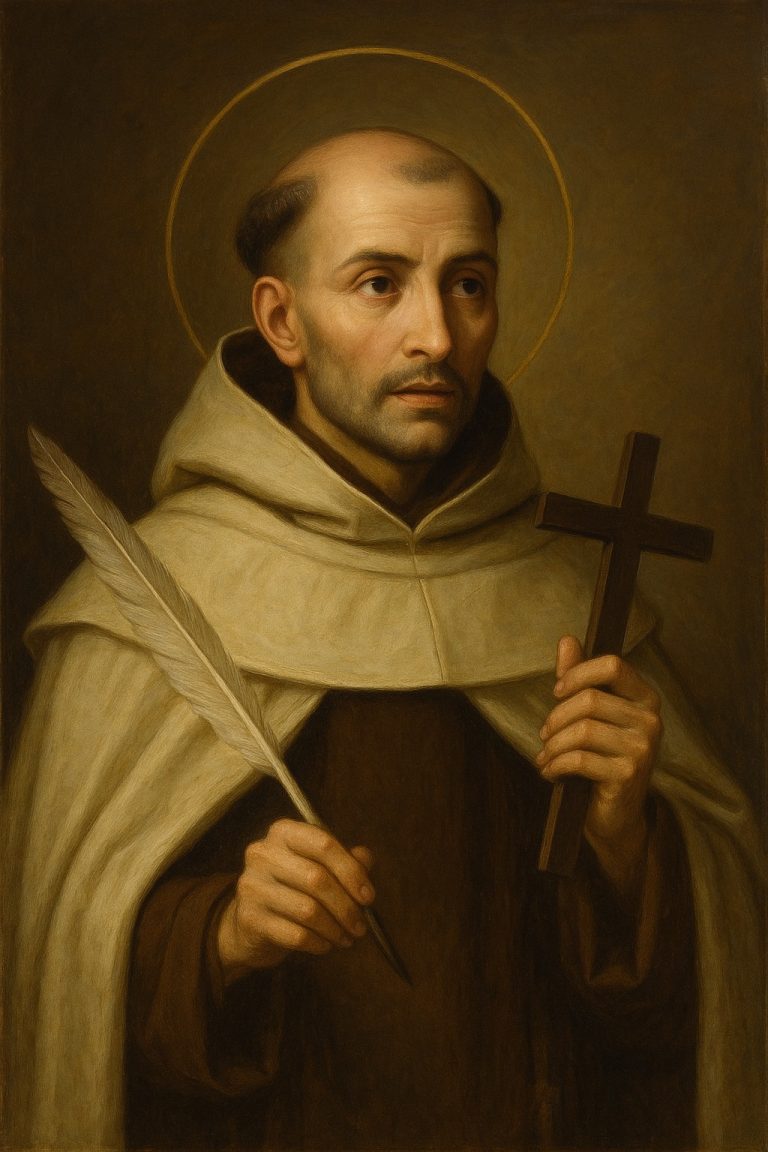
St John of the Cross was a Spanish mystic, reformer, and Doctor of the Church whose feast day is celebrated on December 14.
Born into poverty in Juan de Yepes y Álvarez in Fontiveros, Spain, in 1542, his writings have become foundational works of Christian spirituality. After joining the Carmelite Order, he met St Teresa of Ávila, whose reform movement inspired him to help renew the Carmelite tradition by living a life of simplicity, prayer, and austerity.
Together, they laid the groundwork for what became the Discalced Carmelites.
John’s commitment to reform brought him controversy and suffering. Opponents of the reform imprisoned him for months in harsh conditions. Yet, during this ‘dark period’ he experienced profound mystical insight and began composing some of his most enduring poetry.
This paradox shaped his entire spirituality. The belief that deep union with God often arises through intense struggle, purification, and surrender.
His major works—The Dark Night of the Soul, The Ascent of Mount Carmel, The Spiritual Canticle, and The Living Flame of Love—combine rich poetic symbolism with detailed theological explanation. They explore the soul’s journey toward God through stages of detachment, purifying darkness, illumination, and ultimately divine union.
John’s “dark night” does not refer to despair but to a transformative experience in which the soul is freed from ego and earthly attachments to be filled entirely with God’s love.
He died in 1591 and was canonised in 1726. Declared a Doctor of the Church in 1926, John is one of Christianity’s greatest mystics. His writings continue to guide religious and lay alike who desire a deeper contemplative life and his legacy is one of poetic genius, spiritual depth, and unwavering fidelity in the search for God.
We encourage you to share and use this material on your own website. However, when using materials from Majellan Media’s website, please include the following in your citation: Sourced from www.majellan.media