
The unseen face of God
1 March 2026 2nd Sunday Lent, Year A
Matthew 17:1-9
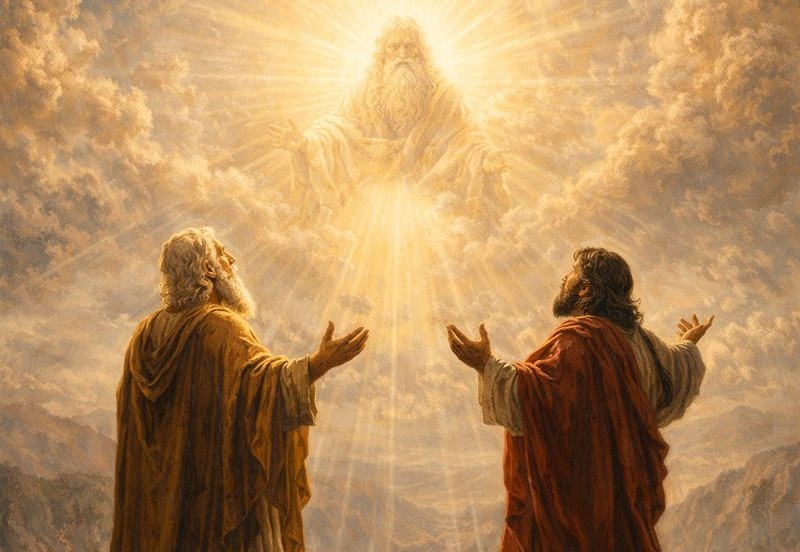
In the Old Testament, the Hebrew word for God’s glory, ‘kabod’, signifies the glorious manifestation of his presence. When this happens, the normally unseen and imperfectly known God makes himself known to his people in a visible and tangible way.
For example, in Exodus, the ‘kabod’ of God goes before his people in visible pillars of cloud and fire. This glorious appearance of God’s presence and power leads the Israelites out of Egypt and it descends on Mt Sinai to give Moses the Ten Commandments. However, when Moses asks to see God’s glory up close, God responds, “No one shall see my face and live.”
When God reveals himself in the Old Testament, there was always some kind of separation or distance between his supremely holy presence and his people. Although God goes before his people and dwells with them, no one is permitted to see him face-to-face. To take another Old Testament example, Elijah responds to the passing presence of God on Mt Horeb (in 2 Kings) by covering his face. This separation recognised the gulf that still existed between God and humanity because of sin.
But in this week’s gospel, Moses and Elijah appear at the top of a mountain, Mt Tabor, and commune face-to-face with the one true God. Jesus’ identity is revealed; he is the ‘kabod’ of God, the same saving presence of God that spoke from the fiery cloud in Exodus.
However, this revelation of Jesus’ divinity will only make sense after his death and resurrection. As much as the transfiguration reveals the truth about who Jesus is, Easter reveals so much more.
On Mt Tabor, Jesus is revealed in his divine glory, clothed in white and shining like the sun. On Golgotha, he is seen in tortured and shamed, stripped of his clothes.
On Mt Tabor, Jesus is surrounded by two of Israel’s greatest heroes, representing God’s communication and enduring presence with his people; on Golgotha, he is flanked by two criminals, representing the depth of sin and suffering in the human condition. Peter is awestruck and wants to stay on Mt Tabor, while he cowers in fear and doesn’t approach Golgotha.
But, at both, the glory of God is unveiled for the whole world, and Jesus is revealed as the one true Son of God. At the transfiguration, a voice from heaven declares that “This is my Son, the Beloved; he enjoys my favour,” at Golgotha, the truth of Jesus’ divinity is proclaimed by a Roman centurion, one of his crucifiers.
As St Paul says in this week’s Second Reading, we are reconciled to God because “he abolished death, and he has proclaimed life and immortality through the Good News.”
And, just as Moses and Elijah saw in the transfiguration, through Jesus’ death and resurrection, we have now seen, in him, the ‘kabod’ of God face-to-face.
Joseph Doyle
© Majellan Media 2026
We encourage you to share and use this material on your own website. However, when using materials from Majellan Media, please include the following in your citation: Sourced from www.majellan.media